
The Practical Application of Front-End Leadership™: The Neha Jhunjhunwala Case Study
Jan 16, 2026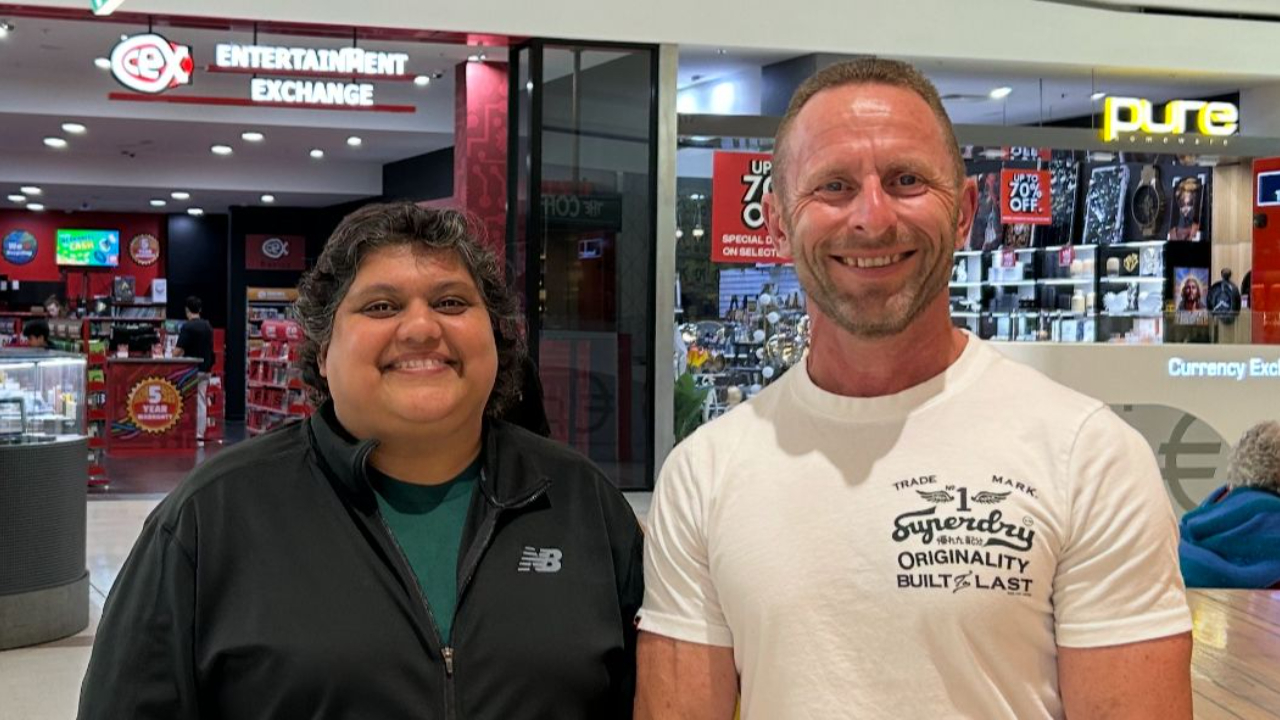
Leadership, at its core, is a test of endurance. It is often a lonely pursuit, characterised by high stakes, invisible pressures, and the constant demand to project strength even when resources are running low. This isolation is compounded when you are a female founder disrupting a traditional, male-dominated industry in a complex market.
This is the exact challenge my great friend and colleague, Neha Jhunjhunwala, faced when she decided to launch the Sri M Centre for Sports Excellence in Delhi, India.
Her journey serves as a perfect case study for what we call Front-End Leadership™. It illustrates two distinct phases of leadership: the fierce battle to build an external empire, and the critical, often overlooked battle to maintain the internal "Human Operating System" that sustains it.
The Foundation Phase: Building the Business (2020–2025)
I first met Neha in 2018 in Melbourne, where we were both completing our Master's program. Even then, her drive was evident. We bonded over shared interests in leadership dynamics, business strategy, and the transformative power of sports. But it was in late 2020, after she had returned to India, that our professional collaboration truly began.
Neha approached me with a bold vision: to democratize sports education in India. She saw a gap in the market, and in the community, where children and families lacked structured opportunities to engage in health, physical education, and sports participation. She wanted to build an organisation that didn't just teach sports but fostered community spirit and wellness.
She asked a simple question: "Can you help me build this?"
Drawing on my years of experience managing large-scale projects in India and my background in corporate leadership, I was honoured to accept the challenge. We moved from friendship to a strategic partnership. This wasn't just about encouragement; it was about operational architecture.
Together, we navigated the "Foundation Phase." My role was to act as the strategic support alongside her vision. We worked to:
- Structure the Business Model for Scale: We moved beyond the idea of a single centre and built a framework that could be replicated.
- Establish Operational Foundations: We implemented systems for logistics, staffing, and curriculum development required for a multi-state rollout.
- Navigate Sociocultural Challenges: We strategised on how a female founder could effectively command respect and market share in North India, a region that presents unique hurdles for women in business.
Five years later, the results of that rigorous planning are undeniable. The Sri M Centre for Sports Excellence is thriving. From a small head office in Delhi, the organisation is now active across three states in North India. They provide incredible benefits through coursework, physical education classes, and community events in Badminton, Football, Basketball, Volleyball, Cricket, and Athletics.
The Audit Phase: The "Silent Predators" of Success
Yesterday, Neha and I reconnected here in Melbourne while she was visiting family. It was a exciting reunion, celebrating the empire she had built. However, as our conversation deepened, I began to see the "Silent Predators" that stalk high-performing leaders.
In our methodology at Betheleader.org, we talk about the Five Ecosystems of Command: Internal, Personal, Professional, Political, and Sociocultural.
When a leader is in "Start-Up Mode," the Professional Ecosystem behaves like a gas; it expands to fill every available space. It cannibalises the time, energy, and resources that belong to the Personal and Internal Ecosystems.
As I listened to Neha, I realised my work with her needed to pivot. For five years, I had helped her secure the company's future. Now, I needed to help her secure hers.
We sat down, and I walked her through the Front-End Leadership™ methodology. I explained that her "Front-End" is her hardware. It is a biological Operating System that is highly sophisticated but fragile.
Most leaders treat their bodies with a "hope strategy". Hoping they will have enough energy to get through the day, while treating their businesses with a "data strategy." We needed to flip that script. We stopped looking at her fatigue emotionally (with guilt or shame) and started looking at it analytically (with data and risk assessment).
We conducted a forensic audit of her Six-Part Infrastructure:
- Sleep: The foundation of cognitive recovery.
2. Nutrition: The fuel for the biological engine.
3. Exercise: The generator of physical resilience.
4. Quiet Time/Rest: The processing time for the brain.
5. Environment: The external triggers of stress or peace.
6. Community: The support network outside of work.
Using our scale, we discovered significant "fracture points." While her business metrics were green, her internal metrics were flashing red. She was operating in a deficit, relying on adrenaline and will rather than sustainable fuel. This is the "Infrastructure Debt", the cost of the world demands of you and what your infrastructure can actually support.
The Execution Phase: Closing the Gaps
Awareness is only the first step. The solution lies in execution.
My sole focus now is guiding Neha through the reconstruction of her Front-End. We are applying the exact same rigor to her health that we applied to her business strategy in 2020.
We are utilising the Leadership Readiness Equation, ensuring that her Capacity meets the Demand. We are not aiming for a vague sense of "wellness"; we are aiming for operational robustness.
Our current strategy involves:
• Risk Management: We identified the specific times of day and specific tasks that drain her battery the most and are re-engineering her schedule to mitigate that risk.
• Values Radar Analysis: We looked at where her core values were being compromised by fatigue, causing internal friction.
• Strategic "Chipping Away": We aren't trying to fix everything overnight.
We are "chipping away" at the deficit. If we can improve her sleep hygiene by 10% and her nutritional timing by 15%, the compound effect on her leadership presence will be exponential.
The goal is to move her back into "Flow State", where she can navigate the tectonic plates of her ecosystems without them crashing into one another, causing the tidal waves of burnout.
Conclusion: The Responsibility of the Integrated Leader
I am incredibly proud of what Neha has achieved. She took the most difficult path in leadership, entering a domain where the community asked, “Why bother?” or said, “There is no way she will succeed”. She proved them wrong.
But a legacy isn't just about what you build; it's about how long you can sustain it.
As leaders, we are experts at analysing P&L statements, operational bottlenecks, and market risks. We use our skills, Emotional Intelligence, and Situational Influence to drive outcomes for our teams. We must learn to turn that "Leadership Intelligence" inward.
At Betheleader.org, and through our Front End Leadership program, we teach that you cannot run a high-performance on broken hardware.
Neha is proof that with the right business strategy, you can build an empire. Now, she is proving that with the right Front-End strategy, you can enjoy it. She is rebuilding her infrastructure to be happy, healthy, consistent, and congruent in all ecosystems throughout her journey.
If you are a leader who has focused entirely on the Professional Ecosystem at the expense of your Front-End, it is time to look at the data.
Visit Betheleader.org to learn more.