The Missing Leadership Discipline: It's Not What You Think
Jan 16, 2026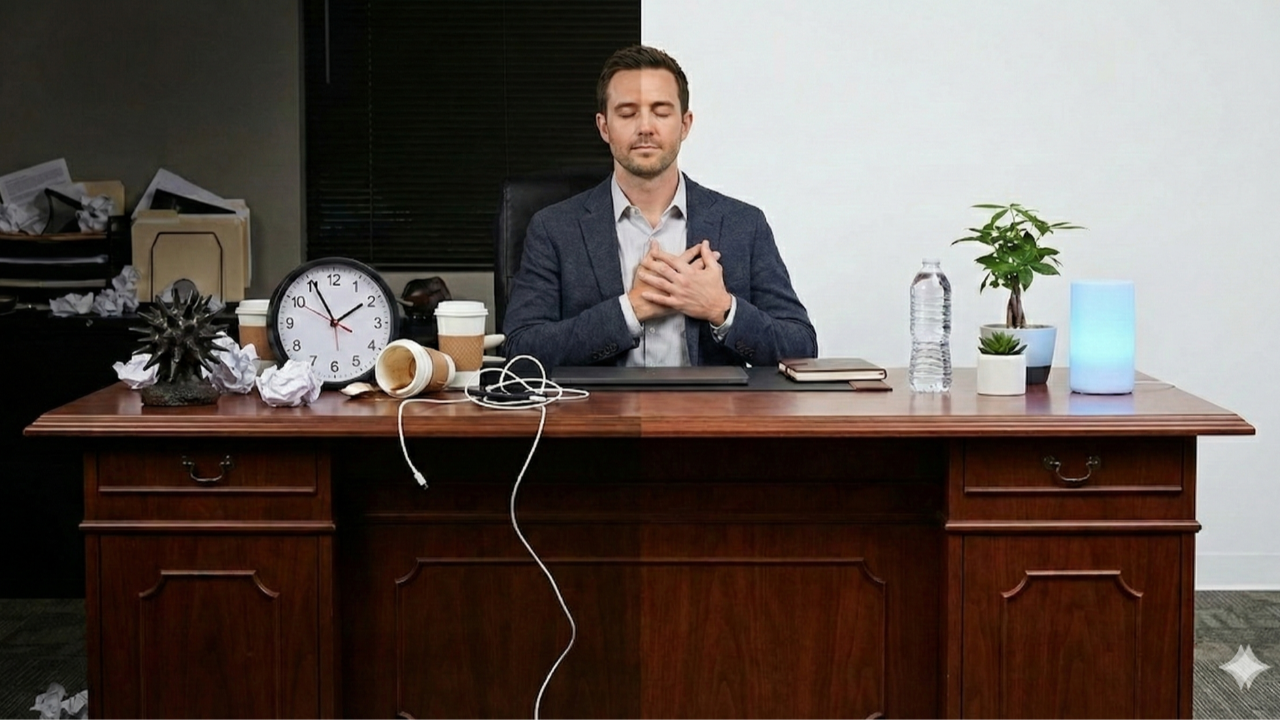
If an elite athlete trained with the absolute intensity, volume, and relentless pace that is common in the C-suite, without prioritising their fundamental biological needs for rest and repair, their career would be catastrophically short. They would succumb to injury, burnout, and a rapid decline in performance. Yet, for many of us, as senior leaders, push ourselves with the same relentless mentality, often mistaking sheer endurance and the ability to "grind" for peak performance.
To lead at the highest level, to be the "Corporate Titans" our organisations need, we must recognise that this approach is fundamentally unsustainable. We demand excellence, resilience, and high output from our teams, but it is equally vital that we, as leaders, operate from a foundation of true strength and clarity, not just willpower fuelled by caffeine, cortisol, and adrenaline.
The alarms are officially ringing on leadership stress, and the latest data from Forbes and DDI is terrifying. The C-suite pressure cooker is exploding: 71% of leaders report spiking stress levels, over half fear imminent burnout, and a staggering 40% are ready to walk away entirely.
The Critical Need for Cognitive and Emotional Space
The most significant challenge we face in the modern corporate arena is not just managing our time or our overflowing inboxes; it's managing our cognitive and emotional bandwidth. High-stakes leadership is not a test of physical endurance; it is a continuous demand on our ability to synthesise complex, often contradictory information, regulate intense emotions, and make clear, strategic decisions under immense pressure.
If each day, we are constantly "on," always connected, and perpetually reactive to the next urgent ping, our brains will never receive the essential signal to downshift. We live in a chronic state of sympathetic nervous system activation. We miss the essential space and time needed to actually process input, to reflect, to introspect, and to think deeply about that information.
As Dr. Bessel van der Kolk explores in his seminal work, The Body Keeps the Score, chronic stress and trauma are not just mental constructs; they are held physiologically in the body, profoundly affecting our overall health and our ability to function optimally. Neglecting this biological reality means losing access to the most critical tool in our leadership arsenal: the space between stimulus and response.
This vital gap is where leadership happens. It is where you choose a strategic, values-driven response instead of a reflexive, emotional, or instinctual one. When that gap closes due to chronic fatigue and cognitive overload, you stop leading and start merely reacting. You lose the capacity for nuance, empathy, and long-range vision.
Strategic Recovery as a High-Performance Discipline
We need to fundamentally reframe our relationship with recovery. It is not a passive act, a sign of weakness, or a luxury to be enjoyed only when all the work is done (which it never is). It is Strategic Recovery, an active, non-negotiable leadership discipline designed to rebuild and reinforce your biological infrastructure so you can sustain high performance over the long term.
The powerful, liberating insight here is that the discipline required for Strategic Recovery is not a new or foreign concept. It is exactly the same discipline you already use every day to achieve success in your business. It requires the same level of intense focus, intentionality, and strategic planning that you bring to a critical boardroom negotiation, a complex merger, or a high-stakes presentation.
You don't need to learn a new skill set. You need to apply the high-performance skills you already possess to your own biology.
Integrating Recovery into Your Actual Life
This is not about compartmentalisation, the fantasy of creating a separate, perfect "recovery space" distinct from your "work space." True Strategic Recovery must be integrated into your actual, messy, real-world life. It’s not about waiting for a two-week vacation to decompress; it’s about building daily and weekly protocols that sustain you in the arena.
It’s the dedication of leadership will to prioritise sleep as the foundation of your cognitive function, not as an inconvenient interruption. It’s the discipline to optimise your nutrition for sustained energy, not just immediate convenience. It’s the commitment to carve out intentional pockets of quiet and solitude within your real-world environment, in your office, on your commute, or in your home, to allow your brain the space it needs to process and reset.
Respecting these biological inputs is some of the hardest work you will do as a leader. It requires the immense discipline to say "no" to the relentless noise, the artificial urgency, and the dopamine-driven demands of the digital world, and to say a resounding "yes" to your own long-term capability and health.
By treating Strategic Recovery with the same seriousness, planning, and execution as any other critical professional discipline, you do more than just sustain your own performance. You model the essential behaviours requisite for a high-performing, resilient, and sustainable organisation. You demonstrate that true leadership is not about burning out, but about burning bright for the long haul.